AUG 05, 2024 • 7 min read
CONSTRUCTION DEWATERING IN NORTHERN CALIFORNIA: NAVIGATING COMPLEX GROUNDWATER PERMITS
Best practices for managing groundwater treatment and disposal during large-scale infrastructure excavation.
When Mercy Environmental was awarded the remediation contract for a former industrial site in Newark, we set an audacious goal: achieve 95% waste diversion through circular economy principles. Eight months later, we exceeded it—diverting 97.3% of all project waste from landfills.
The Circular Economy Framework
Traditional construction operates on a linear 'take-make-dispose' model. The circular economy flips this paradigm: materials are viewed as resources to be perpetually cycled back into productive use. This requires three fundamental shifts: Design for deconstruction, Material passports, and Local material exchanges.
Our Diversion Strategy
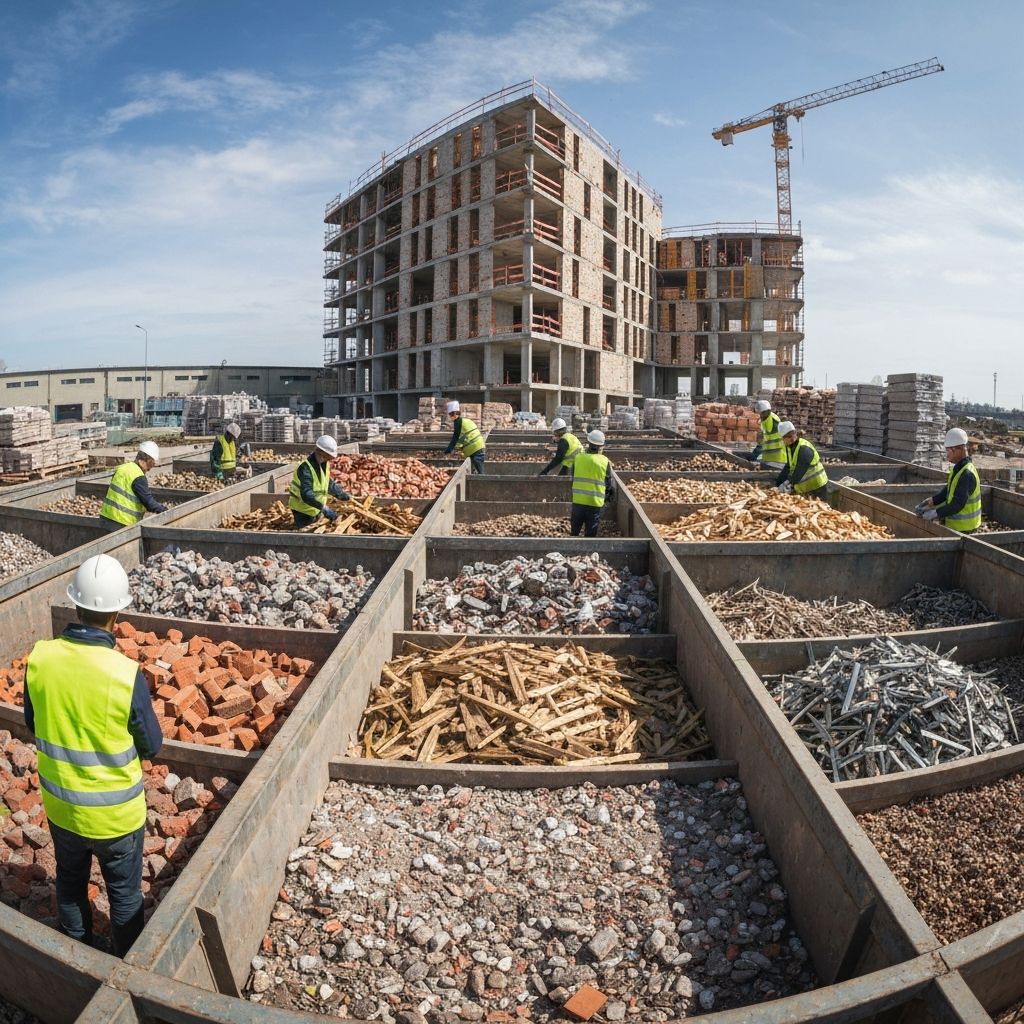
We implemented a multi-stream sorting system on-site, separating materials into 12 categories including metals, concrete, asphalt, wood, cardboard, and contaminated soils. Partnerships with local recyclers, salvage operations, and soil blending facilities allowed us to find productive endpoints for 99.8% of excavated material by volume.
"This project proves that environmental remediation and sustainability are not mutually exclusive. We can restore ecosystems while honoring the circular economy."
— Project Manager Samuel Akinyemi, P.E.
The Business Case
Beyond environmental benefits, the circular approach delivered $127,000 in cost savings versus the traditional disposal method. Tipping fees for contaminated soil alone would have exceeded $850,000—we paid zero by reclassifying soils for beneficial reuse in brownfield capping applications.