
AUG 4, 2026 • 9 min read
DATA CENTER HYDROLOGY PART I: PASSIVE TWO-PHASE COOLING, REGULATORY RISK, AND SILICON THERMAL DENSITY
Hyperscale campuses extracting up to 30 MGD are depleting local aquifers and drying private wells. Here is an engineering analysis of passive two-phase cooling, single-phase fluid risks, low-GWP refrigerant compliance, and direct chip-level thermal integration.
1. The Hydrological Crisis of High-Density Computing
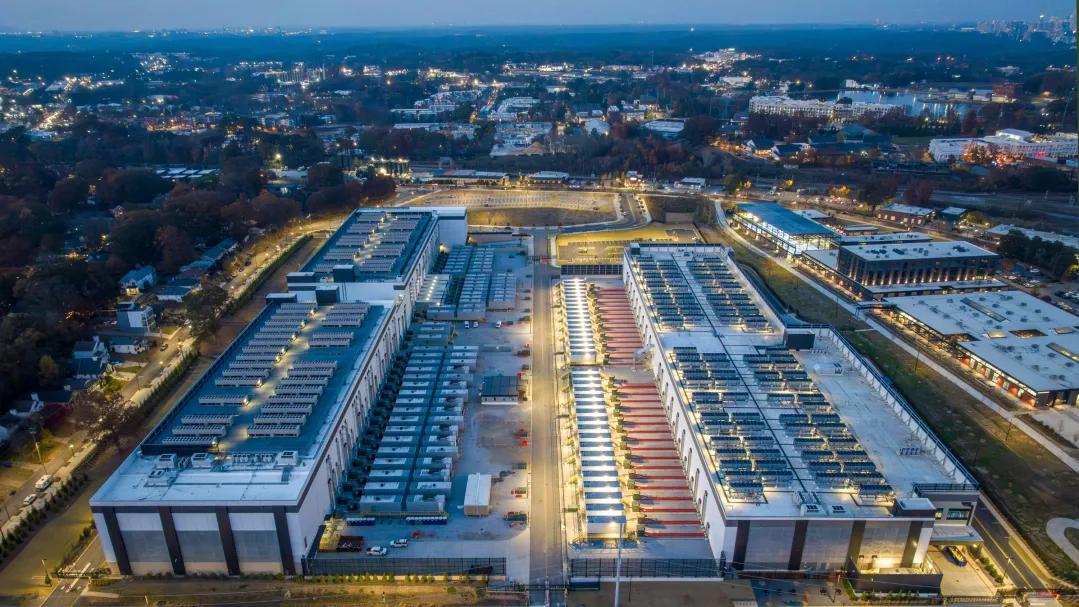
The acceleration of artificial intelligence and high-performance computing (HPC) workloads has pushed rack power densities well beyond legacy air-cooling thresholds. To manage these immense thermal loads, traditional data center campuses rely heavily on wet cooling towers and evaporative systems due to their thermodynamic efficiency. However, the cumulative freshwater footprint of this infrastructure is creating severe environmental and municipal conflicts.
Large-scale data center developments can require between 5 and 30 Million Gallons per Day (MGD) of site-sourced water for evaporative heat rejection. In peri-urban and agricultural watersheds, heavy industrial pumping creates substantial groundwater drawdowns and localized cones of depression. This rapid aquifer depletion has left nearby residential shallow wells dry, provoking aggressive regulatory pushback, municipal moratoria, and heightened social license risk.
2. Liquid Cooling Evolution: Single-Phase Limits vs. Passive Two-Phase Design
To eliminate water consumption, the data center industry has increasingly turned to liquid-to-chip cooling. However, first-generation liquid deployments rely primarily on single-phase closed loops typically utilizing Propylene Glycol-water mixtures (e.g., PG-25). While single-phase liquid offers significantly better Power Usage Effectiveness (PUE) than legacy air conditioning, it presents notable operational vulnerabilities:
- Silicon Leak Hazards: Single-phase fluids remain liquid under operating pressures. Any fitting or cold-plate seal breach poses a catastrophic risk of conductive fluid contamination directly onto high-cost GPU assemblies.
- Sensible Heat Limitations: Single-phase fluids rely entirely on sensible heat transfer ($Delta T$), requiring higher flow rates, heavier pumping power overhead, and lower supply temperatures to manage extreme thermal spikes.
- Active Vapor Compression Penalties: Traditional active refrigerant systems (DX chillers) rely on energy-intensive mechanical compressors to achieve lower operating temperatures, creating severe electrical power penalties.
In contrast, emerging thermal management strategies are pivoting toward **passive, two-phase cooling**. By leveraging isothermal phase change (boiling and latent heat of vaporization) rather than mechanical vapor compression, two-phase systems operate efficiently at significantly higher fluid temperatures. This eliminates the need for power-hungry compressors and bulky external evaporative towers, bringing site-level Water Usage Effectiveness (WUE) to a true zero (0.0 L/kWh).
3. Direct-to-Chip Manufacturing & GPU Architecture Fit
Next-generation thermal management requires precision integration directly at the silicon interface. As GPU micro-architectures evolve (from legacy hardware to advanced platforms like Nvidia Hopper, Blackwell, and Rubin architectures) thermal flux at the die level demands bespoke evaporator cold-plate designs.
Rather than attempting macro-facility retrofits post-construction, leading thermal component manufacturers work at the sub-assembly level to craft specialized two-phase heat sinks. These engineered sub-components are supplied directly to tier-one system integrators, who then build and validate pre-integrated AI racks and high-density clusters before facility deployment. This modular, chip-first approach dramatically reduces field failure rates and aligns thermal capacities directly with chip wattage curves.
4. Legality and Regulatory Hurdles: AIM Act, A2L Safety, and PFAS Scrutiny
While closed-loop two-phase systems solve the local groundwater depletion crisis, shifting to fluorinated gas or synthetic chemical circuits introduces complex environmental and safety compliance mandates.
Under the EPA's American Innovation and Manufacturing (AIM) Act, traditional high-GWP Hydrofluorocarbons (HFCs) are subject to aggressive federal production cutbacks to mandate an 80% baseline reduction by 2029. Engineering teams must evaluate strict legal and material constraints during project design:
- Low-GWP & A2L Transition: Modern systems must transition to Hydrofluoroolefins (HFOs) such as R-1234ze or mild-flammable A2L refrigerant blends (e.g., R-454B). These require compliance with updated mechanical room safety standards (ASHRAE 15 & 34), including leak detection sensor networks and emergency ventilation protocols.
- PFAS & Dielectric Chemical Regulations: Two-phase immersion fluids and fluorinated dielectric fluids are facing increasing regulatory scrutiny in both the US and EU due to Per- and Polyfluoroalkyl Substances (PFAS) persistent chemical classification. This is driving research toward natural refrigerants like CO2 (R-744) and closed-loop hydrocarbons.
- Thermodynamic Tradeoffs: Air-cooled heat rejection arrays for closed-loop systems require significantly larger surface areas than wet towers due to the lower volumetric heat capacity of air (1.2 kJ/m³K vs. 4,184 kJ/m³K for water), necessitating careful spatial footprint planning.
"The future of high-density thermal management isn't just about moving water away from the facility but it's about replacing single-phase leak risks with passive, phase-change latent heat transfer directly engineered around the GPU die."
— Samuel Akinyemi, P.E., Lead Environmental Engineer
5. Market Deployment Pathways: Enterprise & Edge vs. Hyperscale Realities
While hyperscale cloud providers (100MW+ campuses) struggle to pivot away from sunk water infrastructure and massive legacy evaporative cooling designs, specialized enterprise clients and edge computing facilities are adopting passive two-phase architectures first. Edge deployments (often located in arid regions or densely populated urban corridors with strict water allocation limits) benefit immediately from zero-water, high-density thermal stability.
For engineers, developers, and municipal planners, evaluating the watershed impact of computing infrastructure requires looking beyond surface-level PUE metrics. Integrating direct-to-chip passive two-phase thermal management secures operational continuity while insulating facilities from water rights litigation and strict low-GWP refrigerant phaseout penalties.
Engineering & Compliance Takeaways
Navigating the water-energy-chemical nexus of modern data center development requires integrated hydrogeologic, mechanical, and regulatory expertise. If your team is evaluating environmental impact assessments, water supply risk, or low-GWP thermal transition plans for computing projects, reach out to Mercy Environmental for technical guidance.